
Why the Everest Rumors Start in May
In May, the “Magic Window” opens because the strong winds at the top of Mount Everest (8,848m) slow down. This makes it the safest time for climbers to try and reach the summit before the rainy season begins in June. This is when everything on the mountain comes alive.
Think of it this way. For most of the year, jet stream winds roar over the top of Everest at over 100 miles per hour. No human can climb in those conditions. But in mid-May, those winds shift north. A weather window of 3 to 5 days of much calmer winds opens up sometime in the last two weeks of May. Climbers call this the Magic Window and they wait all year for it.
In 2026, the best days to reach the summit are between May 8 and May 20. The perfect summit push normally takes place during the second half of May when the weather is at its most stable. This is the busiest week of the entire climbing year.
This year there were some weather delays in April 2026 which pushed some teams back. But right now in early May, the main summit push is happening. Base Camp is crowded with colorful tents and busy crews who are planning to climb the summits. The countdown has begun.
Did You Know?
On a good May day, Base Camp temperatures can reach +15°C while the summit stays around -20°C. Mid-May has historically shown the highest success rates.
The Heartbeat of Base Camp
The Energy at the Heart of the Mountains
The Everest region is full of energy in May because hundreds of people from all over the world are at Base Camp (5,364m) getting ready for their big climb. There is a feeling of excitement and teamwork everywhere you look. You can feel it the moment you arrive.
Everest Base Camp sits at 5,364 meters above the sea. It is like a small city made of tents. There are climbers from China, the USA, France, Japan and many more countries. They eat together. They plan together. And they wait together for that Magic Window to open.
But before any climber can even try for the summit, a special group of heroes has to go first. They are called the Icefall Doctors.
Heroes of the Mountain
The Icefall Doctors are expert Sherpa teams who climb into the dangerous Khumbu Icefall before everyone else. They fix the ropes. They build the ladders. They set the path. Without them, no one could safely pass through this broken and shifting glacier below the summit. Every single climber owes them a huge thank you.
The Khumbu Icefall is one of the most dangerous places on Earth. Huge blocks of ice called seracs can fall without warning. The Icefall Doctors walk this path over and over again to keep the route safe. They are the quiet reason why so many climbers can dream of reaching the top.
The Sherpa people, who have lived in the Khumbu region for generations, also use their deep knowledge of the mountains to read the weather. They watch the shape of the summit plume and the color of the sky to predict when the mountain will permit an ascent.
Join the Adventure
How to Join the Fun (Without Climbing)
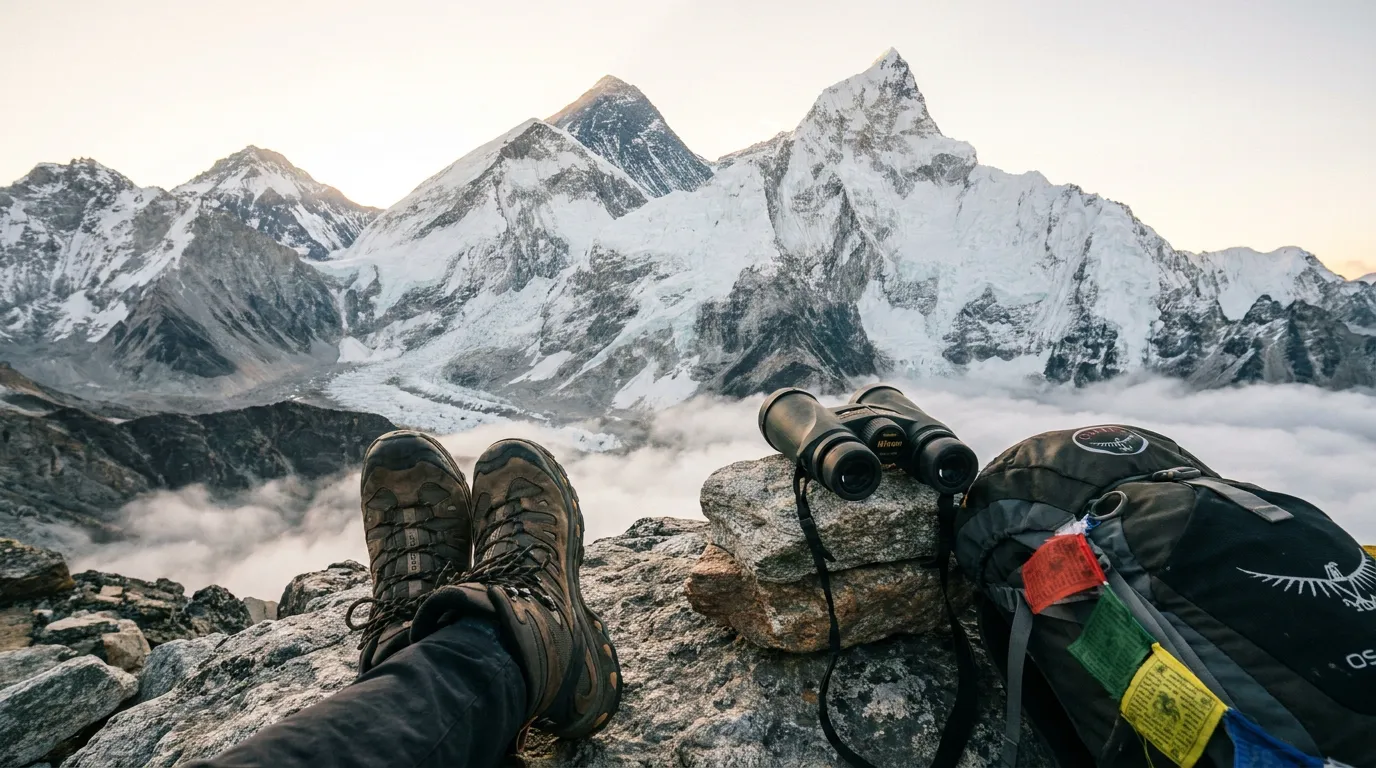
You do not have to be a professional climber to enjoy the season. Trekkers can go to viewpoints like Kala Patthar (5,545m) to watch the climbers through binoculars or stay in high-quality local lodges to feel part of the adventure. The mountains welcome everyone.
The trail up to Everest Base Camp is open to regular trekkers. You do not need special climbing skills. You just need good boots, a warm jacket and a lot of energy. Along the way you pass through villages like Namche Bazaar and Tengboche. These are full of friendly faces and great food.
The best viewpoint for watching climbers is Kala Patthar at 5,545 meters. From there you can see the entire south face of Everest. On a clear morning you can even spot climbers moving up the high slopes with your binoculars. It is one of the most exciting things you can watch from a safe distance.
After a long day of trekking, a good lodge makes all the difference. Here are the top-rated spots for 2026:
| Lodge Name | Location | Best For |
|---|---|---|
| Hotel Everest View | Above Namche Bazaar (3,962m) | Seeing the top of Everest directly from your room window. A truly rare experience. |
| Namche Terrace | Namche Bazaar | Known for a genuine hotel experience in the mountains with great reviews from trekkers in 2026. |
| Yeti Mountain Lodge | Lukla (2,860m) | A cozy and warm place to stay right at the start of the trek near Tenzing-Hillary Airport. |
Practical Tips
Quick Tips for Your May Visit
The best way to see the mountains is to wake up at 6:00 AM. In May, the mornings are clear and bright, but clouds often hide the peaks by the afternoon. Early mornings give you the best views and the best photos of your whole trip.
Rise Early: Set your alarm for 6:00 AM. The morning light turns the snow on Everest a warm orange color. This is the perfect time for photos.
Watch the Clouds: By early afternoon you may see clouds building. The beginning of May has sunny mornings and good conditions, but afternoon clouds can appear. Pack a light rain cover.
Layer Up: Mornings are cold at high altitude. Nights at Base Camp can be below freezing even in May. Layers are your best friend.
Stay Hydrated: At high altitude your body needs more water than usual. Drink slowly and steadily to help your body adjust to the thin air.
As June gets closer you will notice “monsoon hints” in the air. The sky may feel heavier. There may be a short shower in the late afternoon. There might still be some clear mornings in early June but clouds and showers become the norm in the middle of the month. So visiting now in May is the perfect time to catch the region at its very best.
Final Call
The Last Chance Before the Rains
Right now is one of the most exciting moments in the Everest region all year. Climbers are pushing for the summit. Trekkers are walking the trails. The lodges at Namche Bazaar and Lukla are full of energy and laughter. Everyone is chasing the same dream of being close to the top of the world.
But this window will not stay open for long. The heavy summer monsoon rains arrive in June. When that happens the trails become slippery and the mountain hides behind thick clouds for months. The Everest season is over until the autumn.
So if you ever dreamed of seeing the world’s highest mountain up close, the time is right now. The Magic Window is open. The Icefall Doctors have done their work. The Sherpa guides are ready. All that is missing is you.